Adopting a child is a complicated experience for everyone who goes through the process. But adopting a child with special needs can bring even more unique challenges that many prospective parents don’t always expect. In 2025, awareness of these challenges has grown, along with debates about how best to support families and encourage more loving homes for children who need them most. Let’s discuss special needs adoption.
What “Special Needs” Actually Means
There isn’t a single national definition of special needs, and it can vary by state or country. Generally, it includes children with physical or developmental disabilities, emotional or behavioral challenges, medical conditions. However, in adoption, it can also apply to those who are older, part of a sibling group, or have experienced trauma, all factors that can make adoption placement more complex. (Adoption.org)
According to data from adoption advocacy groups, there are hundreds of thousands of children categorized as special needs awaiting adoption. (Adoption.org)
Statistics: Adoption Reality for Children With Special Needs
Reality shows how special needs adoptions compare with other placements:
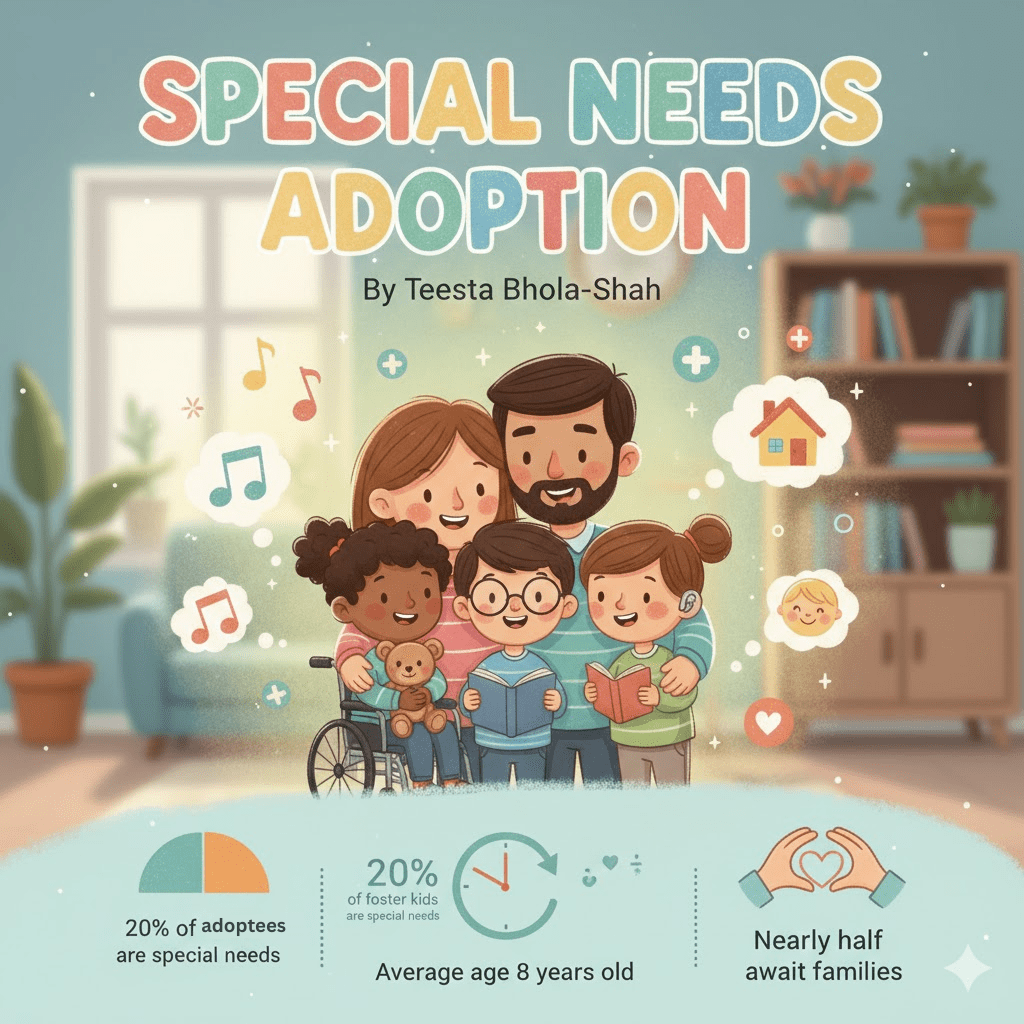
- About 20% of children in foster care are classified as having special needs. (ZipDo)
- Roughly 25% of children adopted from foster care have special needs. (ZipDo)
- Many of these children wait longer for adoption — the average age of children with special needs awaiting placement is around 8 years old. (ZipDo)
- Nearly half of children with special needs in foster care are not yet matched with adoptive families, despite efforts to find homes. (ZipDo)
- Around 15% of children adopted with special needs require lifelong services, showing long‑term care is often needed. (WifiTalents)
These statistics show both success and the gap between need and placement for many of these children. (ZipDo)
Why Special Needs Adoption Can Be More Difficult
There are multiple layers to the challenge:
1. Preparation and Support Needs
Children with special needs often require extra medical care, therapy, or behavioral support, which not all families can provide for. Support systems vary by state and are often inconsistent, meaning some families don’t get the help they need after adoption. (Adoption.org)
2. Emotional and Behavioral Factors
Many children with special needs also carry emotional trauma or attachment challenges from early life experiences. Nearly 60% experience developmental delays, and emotional or behavioral needs are common. (ZipDo)
3. Long Waiting Times
Because of these complexities, special needs children often wait longer for homes than others. Many adoptive parents choose infants or healthy younger children because they feel more prepared for those situations. They may find it harder to adopt a child who is older, wanting to bond with their adopted child from the beginning of their life. (ZipDo)
Supporters vs. Critics: Differing Opinions
Supporters of special needs adoption say:
- Every child deserves a loving home, and parents should be encouraged and supported to adopt children who face the toughest barriers.
- With training, counseling, and community support, many families report positive outcomes and emotional closeness with their adopted child. Research indicates a high rate of warm parent‑child relationships in these cases. (Gitnux)
- Awareness campaigns can challenge stigma and help more families feel prepared to adopt children with special needs. (The Times of India)
Critics or more pragmatic people highlight concerns that:
- Some prospective parents feel overwhelmed or unprepared emotionally and financially, and believe it’s okay not to adopt a child with special needs if they know it’s beyond their capacity.
- Without proper funding and systemic support, families may struggle long‑term. In the UK, cuts to adoption support have already caused serious strain for some adoptive households. (The Guardian)
What Experts Say About Improving the System
Most professionals agree that support is just as important as placement:
- Better post‑adoption support services like therapy, respite care, and medical assistance can help reduce disruption rates and improve outcomes. (Gitnux)
- Mandatory preparation programs for families adopting children with complex needs can better equip them for reality, reducing burnout and crises. (Gitnux)
- Awareness campaigns help challenge negative stereotypes that only “perfect” babies are adoptable, and show that many special needs children can thrive in loving families. (The Times of India)
Educating parents, creating stronger supports, and having honest, compassionate conversations are vital steps to making special needs adoptions better supported and more successful in the years ahead.

One response to “Adoption With Special Needs – What You Should Know”
Important article about a greater understanding and need for support for adoption of children with special needs
LikeLike