By Teesta Bhola-Shah
ICWA is one of the most important laws in the history of Native American adoption – and many people don’t know what it really is. You may have wondered, “What even is that?” Well, ICWA stands for the Indian Child Welfare Act, and it’s actually one of the most important—and controversial—laws affecting Native American communities in the United States.
Passed in 1978, ICWA was created to protect Native American children from being removed from their families and placed in non-Native homes. But to really understand why ICWA matters, you have to understand what was happening before it existed—and trust me, it wasn’t pretty.
A Not-So-Great Chapter in U.S. History
Before ICWA was passed, the child welfare system in the U.S. was removing Native American children from their homes at shocking rates. Between the 1950s and 1970s, about 25% to 35% of all Native children were taken from their families, often for reasons that had more to do with cultural bias than actual neglect or harm.
Sometimes kids were removed just because their family shared a home with extended relatives (which is customary in many Native cultures) or practiced traditional customs. Instead of trying to understand Native ways of life, state agencies treated them as unfit—and placed Native children with non-Native foster families or put them up for adoption, far away from their communities.
This was a clear form of cultural erasure. Taking children away from their language, religion, traditions, and people was tearing tribal nations apart from the inside out.
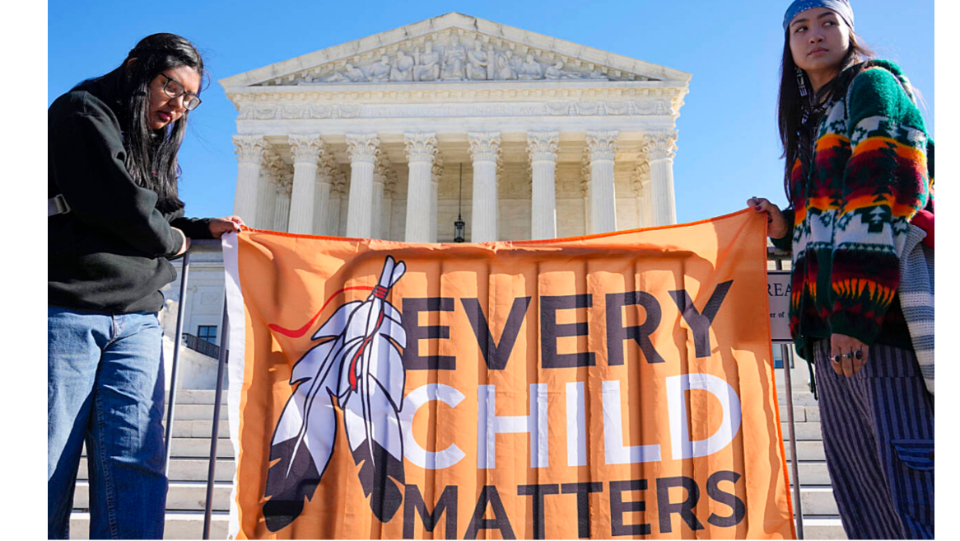
Demonstrators stand outside the U.S. Supreme Court, as the court hears arguments over the Indian Child Welfare Act, Nov. 9, 2022, in Washington. | Mariam Zuhaib / AP
What ICWA Actually Does
In 1978, Congress passed the Indian Child Welfare Act to fix this injustice. ICWA gives tribes and Native families a stronger voice in child welfare cases involving Native children. Here’s how it works:
1. Tribal Involvement
If a child is a member of a federally recognized tribe (or is eligible for membership and has a parent who is a member), the tribe must be notified of any foster care or adoption proceedings. Tribes have the right to intervene—and sometimes even move the case to tribal court.
2. Placement Priorities
ICWA outlines a specific order for where Native children should be placed:
- With extended family (if possible),
- With a member of the child’s tribe,
- Or with another Native American family.
- If none of these options are available, only then can the child be considered for adoption somewhere else.
The priority system helps to make sure that families aren’t broken up and that children aren’t consistently removed from Native culture.
3. Stronger Protections for Families
Unlike in regular child welfare cases, ICWA requires states to make “active efforts” to keep Native families together before removing a child. Also, the court must be convinced—with clear evidence—that staying in the home would cause serious emotional or physical harm to the child. In other words: no removing kids just because the family doesn’t fit someone else’s idea of what a “proper household” looks like.
Many people believe ICWA is based on race, but this is a common misconception. ICWA is based on tribal citizenship and political status. Federally recognized tribes are sovereign nations, and their members are considered citizens of those nations. So ICWA isn’t about giving people special treatment because they’re Native; it’s about respecting the legal and political rights of tribal nations to care for their own children.
So Why Is It Controversial?
Even though ICWA has been around for decades, it’s still the subject of legal battles. Some opponents argue that ICWA makes it harder for non-Native families to adopt Native children. Others claim that it prioritizes tribal rights over the “best interest of the child.”
But many experts argue that maintaining a child’s cultural identity is in their best interest. After all, children who grow up connected to their heritage often feel a stronger sense of belonging, identity, and self-worth.
In 2023, ICWA was upheld by the U.S. Supreme Court in a major case (Brackeen v. Haaland), with a 7–2 decision affirming that the law is constitutional. The ruling was seen as a big win for tribal sovereignty and Native families.
Despite its protections, Native children are still more likely to be removed from their homes than white children. In some states, the numbers are shockingly high. In Minnesota, for example, Native children are almost 17 times more likely to be placed in foster care. ICWA functions to change that, and it’s a tool to keep Native children from being removed from their families as they were in the past.

3 responses to “What is ICWA – And Why Does it Matter?”
Wow an eye opener. Look forward to reading more.
LikeLiked by 1 person
What a great idea to have a website for such stories!
LikeLiked by 1 person
[…] (If you want to learn more about ICWA, I actually wrote a separate post about it. Click here to read… […]
LikeLiked by 1 person