
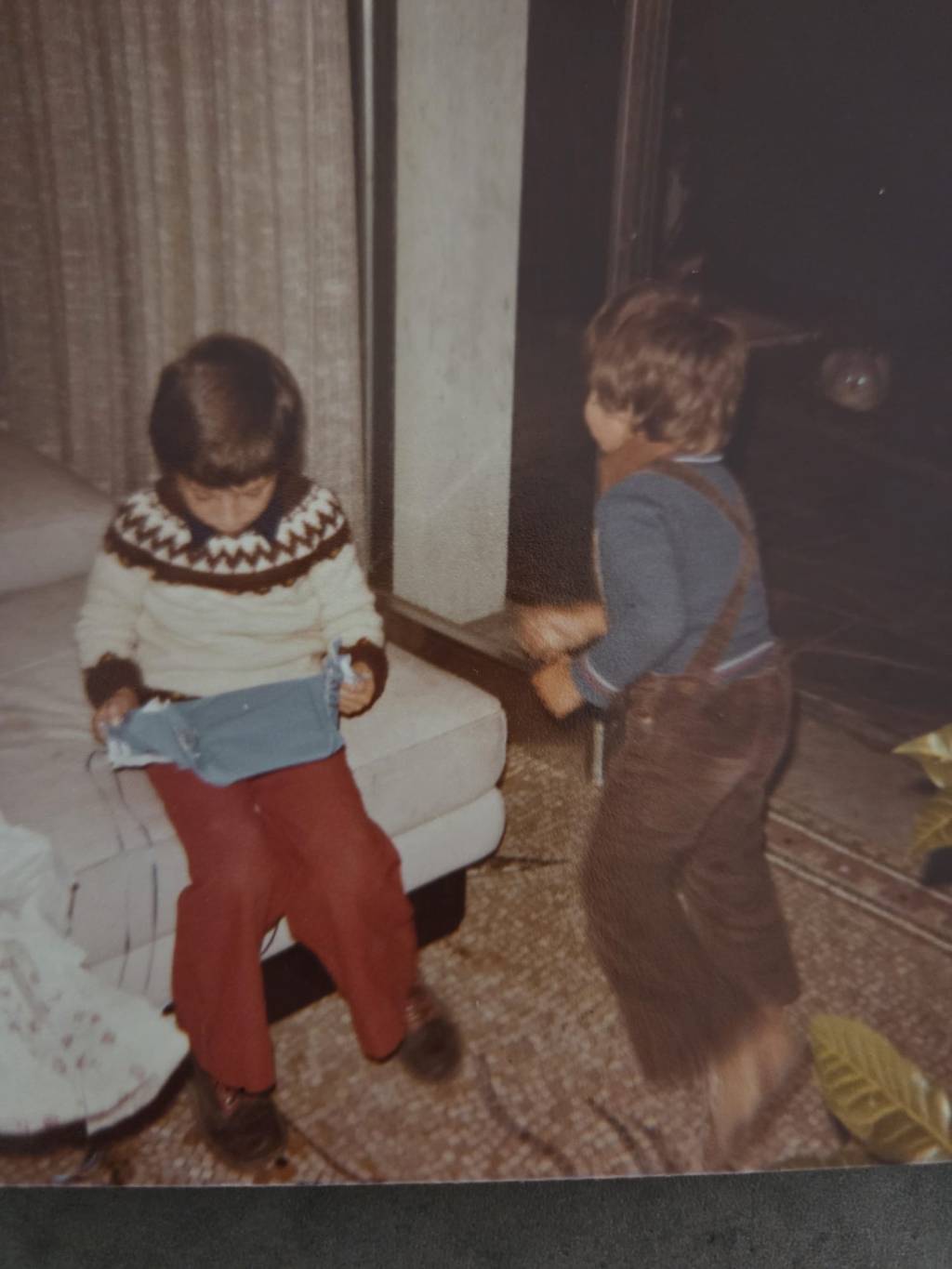
R. Marin is the pen name of a self-published author whose first novel, Despite it All, I Made It Through, traces his life from birth to age eighteen. His childhood was shaped by an absent biological mother, a devoted foster mother, and a legal status that never quite matched the family he actually lived in. In an interview about his book, Marin described something that surprised him to have to explain at all: the woman who raised him, loved him, and whom he calls “mother” without hesitation, could not legally adopt him. Not because she didn’t want to. Because his biological mother, who had effectively given him up in every practical sense, never relinquished her legal rights, and the courts never declared him legally adoptable.
This article isn’t about the emotional core of Marin’s story — that’s covered elsewhere. It’s about the legal machinery underneath it: why Italian law left him in that position, what that framework actually required, and whether a child born today in Marin’s circumstances would end up anywhere different.
Marin was careful, almost lawyerly himself, in explaining the distinction that shaped his childhood. “It’s not exactly an adoptive mother,” he said. “I note this word, foster mother, because she didn’t have the right to adopt me, by the law, by the law in Italy at this time, because my biological mother still didn’t say yes. She abandoned me, but she didn’t say yes for adoption.”
That single sentence describes a real and specific feature of Italian family law. At the time Marin entered foster care in 1978, Italian adoption law was governed primarily by the 1967 reform on special adoption (Law No. 431 of 5 June 1967). Law No. 184 of 1983 later reorganized and expanded the legal framework for adoption and foster care, and was itself substantially updated in 2001. Even under the 1967 framework, a child could not simply be adopted because a biological parent had stopped showing up. A juvenile court could declare a child adoptable when the child lacked the material and moral assistance of their parents or responsible relatives, but that determination depended on the court’s assessment of the child’s circumstances rather than solely on whether a biological parent voluntarily relinquished parental rights. Under the later 1983 framework, adoption continued to require a formal judicial finding of adoptability (dichiarazione dello stato di adottabilità) issued by the specialized juvenile court (Tribunale per i Minorenni).
Marin’s account suggests the court never declared him legally adoptable, though without access to his judicial file it is impossible to know precisely why. His biological mother wasn’t entirely absent — she reappeared, however inconsistently. “Almost every Sunday it was an obligation for me to go see my biological mother,” he said. That recurring, if minimal, contact may have contributed to the court never declaring him legally adoptable, although without access to the complete judicial record it cannot be stated with certainty. The relationship existed on paper and in scheduled visits, even if it existed nowhere else.
What Marin lived through instead was long-term affido familiare — foster care — which Italian law treats as something fundamentally different from adoption, both in name and in legal substance. Foster care is designed to be temporary. It’s meant to give a child a safe home while working toward one of two outcomes: reunification with the birth family, or, if that proves impossible, an eventual declaration of adoptability that opens the door to permanent adoption. Crucially, foster care does not sever a child’s legal relationship with their biological parents the way adoption does. The birth parent remains, in the eyes of the law, the parent.
The problem — and it’s a problem Italian family law scholars and children’s advocacy groups have written about extensively — is what happens when a foster placement doesn’t resolve cleanly into either outcome. A parent doesn’t disappear entirely, but doesn’t parent either. Reunification never happens, but abandonment is never formally declared. The child simply stays in legal limbo, sometimes for their entire childhood, cared for full-time by people who have no permanent legal claim to them. Marin’s phrase for his foster mother — “she didn’t have the right to adopt me, by the law” — is a plain description of the legal limbo he experienced.
It’s worth noting what this arrangement was not: it was not a case of a foster or adoptive mother being blocked by red tape or bureaucratic inefficiency. It reflects a deliberate policy choice embedded in Italian law — one that prioritizes a biological parent’s ongoing rights, however minimal their involvement, over a functioning family relationship that already exists in practice. That choice is defensible on its own terms; the same reluctance to sever biological ties too easily is also what protects families from having children removed over poverty or hardship alone. But it also means a child can spend an entire childhood being loved and raised by one woman while remaining, legally, the unclaimed child of another.
What comes through most clearly in Marin’s own account isn’t legal frustration — he doesn’t frame his childhood as a grievance against the Italian state. Asked about misconceptions people might hold about children raised this way, he pushed back gently against the idea that anything about the arrangement made him lesser, or different, within his own family. “We just maybe, yes, we didn’t have the luck of other families who have children who are born and grow up directly in this family,” he said. “Maybe we just came after.”
At the same time, he was honest that his biological mother’s continued, minimal presence in his life — the very thing that likely kept a court from ever declaring him legally adoptable — was itself a source of pain rather than comfort. The Sunday visits were, in his words, “an obligation.” When he went to her in a genuine crisis as a young man, hoping for the kind of help a parent provides, he described being turned away outright: “She didn’t even open the door.” He calls this “a big shock” — a strikingly restrained description for what amounts to a second abandonment, delivered by the same parent whose unresolved legal status had shaped his entire childhood.
The contrast between a legal system that kept his biological mother formally attached to him, set against a woman who wouldn’t open her door when he needed her is, in many ways, the sharpest illustration of the gap between what Italian adoption law was protecting and what it was actually delivering in his case.

Has Anything Changed Since Then?
Marin’s childhood began under the 1967 adoption law, with Law No. 184 of 1983 coming into force several years after he had already entered foster care. But this law was updated with the 2001 reform (Law 149/2001), which reaffirmed and tightened the requirements around declaring a child adoptable — explicitly stating, for instance, that a birth family’s poverty alone can never justify severing parental rights, and directing social services to support struggling biological families rather than replace them. That reform, while protective of biological families in the abstract, did nothing to resolve the specific limbo Marin describes: a child in stable, long-term foster care whose biological parent remains nominally present but functionally absent.
The most significant, and most directly relevant, change came later — in 2015, with Law 173/2015, known in Italy as the “continuità affettiva” (continuity of affection) law. It was written almost precisely for cases like his. Before 2015, a long-term foster family generally had no formal advantage in seeking to adopt the child they had raised for years, even once a child was eventually declared adoptable; courts were not required to weigh the depth or duration of that bond at all. The 2015 reform changed that directly: it requires juvenile courts to take into account the emotional ties and the stable, lasting relationship a child has formed with a foster family when deciding on adoption, and it gives foster families who have raised a child for a prolonged period a genuine, legally recognized pathway toward adopting that same child. The reform was designed to preserve significant emotional bonds formed during long-term foster care by requiring courts to consider those relationships once the legal conditions for adoptability or adoption had otherwise been established—an acknowledgment that the earlier system could leave children exactly where Marin spent his childhood: cared for, but unclaimed.
So would a child in Marin’s exact position end up somewhere different today? Partially, yes. If his biological mother today made the same obligatory appearances while a foster mother provided all the actual care, current law would require the court to give serious consideration to the emotional bond formed with that foster family once the legal conditions for adoptability had otherwise been established. The foster mother would have a clearer legal pathway to seek adoption than existed during Marin’s childhood, but the reform does not itself eliminate the underlying legal requirements for adoptability.
What hasn’t changed is the underlying structure: Italian law still requires either a biological parent’s consent or a formal judicial declaration of abandonment before an adoption can proceed, and a parent’s occasional, minimal reappearance can still complicate or delay that declaration. Long-term foster arrangements that never fully resolve into adoption still exist in Italy today, and children still grow up, as Marin did, in homes where the person raising them and the person the law recognizes as their parent are not the same. The 2015 reform narrowed that gap without closing it, but it definitely addressed a significant problem. Protecting the rights of biological parents is another important objective that’s necessary for the law to cover.
Marin’s book is, among other things, a record of what it feels like to live inside that gap as a child, before you have the language, legal or otherwise, to understand why it exists. Legally, almost nothing about his family had ever been resolved. Emotionally, as he tells it, everything already had.
You can find the link to R. Marin’s first book on Amazon here: https://www.amazon.com/dp/B0H2SLM12X
