
When I arrived at the District Child Protection Unit (DCPU) in Bangalore Urban Central for my internship this summer, I expected to learn about India’s adoption system. I also learned that adoption is only one small part of a much larger network dedicated to protecting children.
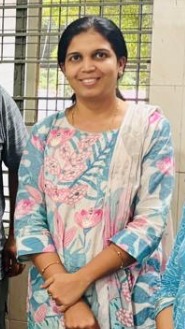
One of the first people I met was Leena Kallammanavar, the District Child Protection Officer (DCPO) for Bangalore Urban Central. Adoption agencies, Child Care Institutions, and the Child Welfare Committee each have distinct responsibilities, and Leena Maam’s job connects them all. Her work extends far beyond children awaiting adoption. Every day, she coordinates with government departments, schools, police, courts, hospitals, and nonprofit organizations to ensure children across the district are safe, supported, and protected.
Leena Maam has spent nearly two decades working in child welfare. She entered the Department of Women and Child Development in 2008 as a Child Development Project Officer before serving as superintendent of both the Government Girls’ Home and Shishu Mandir, where she worked directly with children for over seven years. Only eight months before our interview, she stepped into her current role as District Child Protection Officer.
Despite working in several different areas throughout her career, she said child protection has always been where she wanted to be. “Child protection… is very close to my heart. I can feel what we have done. Every day we can feel that we do some work.”
Unlike many government positions where paperwork can spend weeks moving between departments, Leena Maam enjoys seeing the impact of her work immediately. “In other responsibilities, if some file goes, you have to take so many permissions. It has to go to so many departments. But this field—every day we do something. We reach out to people. We reach out to schools, colleges, students. It’s a very dynamic role.”
That sense of constant movement became clear during my time at the DCPU. Staff members were rarely sitting behind desks for long. One day they were visiting a Child Care Institution. Next, they were meeting with another government department, speaking at a school, or conducting inspections elsewhere in the district.
Leena Maam explained that a typical day rarely looks the same. “I visit [the childcare institutions] frequently. I take meetings. NGOs are also running some CCIs under me. Sometimes we go for visits. We go to the CCIs, we go to the schools, we go to college, and sometimes we’ll be having coordination meetings.”
What surprised me most was how much of her job revolves around collaboration.
When people think of child protection, it’s easy to picture one department handling everything. But according to Leena Maam, protecting children simply doesn’t work that way. “DCPU’s role is very essential in child protection aspects. We don’t work in a cocoon or as an individual person. We have to have a lot of coordination between different stakeholders—education, police, home department, labor department, judiciary, social welfare department, backward classes welfare department, and many others.”
Children move through every part of society. They attend school, ride public buses, play in parks, visit hospitals, and interact with countless adults every day. Because of that, protecting them requires everyone—not just child welfare professionals—to work together.
As Leena Maam explained, “Children have to be safe everywhere. It’s not only the responsibility of a DCPO or whoever is working in this field to safeguard the protection, welfare and development of a child. It’s a holistic approach.”
Listening to her, I realized that the DCPU isn’t simply responding when problems occur. Much of its work involves making sure different pieces of the child protection system actually communicate with one another.
This coordination also extends beyond government offices. Throughout the district, the DCPU works closely with nongovernmental organizations operating Child Care Institutions, allowing the department to monitor children’s welfare while connecting organizations with the resources they need.
While much of Leena Maam Kallammanavar’s work involves coordination behind the scenes, she also spends a significant amount of time visiting the places where children live, learn, and grow. During our conversation, she repeatedly emphasized that child protection is not confined to government offices—it happens in schools, childcare institutions, colleges, and communities throughout Bangalore Urban Central.
One place that remains especially meaningful to her is Shishu Mandir, where she previously served as superintendent for three years. “Shishu Mandir, when compared to all the institutions… it’s one of the very touching and emotional places for me sometimes. Whenever you see small kids, very young, they don’t know anything about life or themselves or the family.”
She explained that the children who arrive at Shishu Mandir often come from incredibly difficult circumstances. “Many times they will be abandoned. A newborn child will be abandoned. Sometimes they are two years, three years, because of family disturbances and dysfunctional families and marital problems. Sometimes children are neglected. They have been abused by their own parents, mother or father.”
Rather than dwelling on the circumstances that brought children there, Leena Maam focused on what happens after they enter the child protection system. “When the children are very small, they can be turned into anything. ‘Catch them young’ is a tagline which suits all the children. Whatever age group—when they come into our protection ambit at a younger age—there are more chances of successful rehabilitation stories for the children.”
The idea of rehabilitation came up several times throughout our interview. Whether children eventually reunite with family, enter foster care, are adopted, or grow into independent adults, Leena Maam sees the goal of child protection as helping children build stable, healthy futures.
Outside of residential care, much of her work shifts toward preventing children from entering the protection system in the first place.
One of the DCPU’s largest responsibilities is conducting awareness programs across Bangalore. “We go to the schools, we go to the colleges… Through those initiatives, more of an awareness for child protection aspects.”
The topics vary depending on the audience, but the goal is always the same: helping children understand their rights and making sure they know where to seek help. “Whenever we go to the schools, we give more awareness. Whatever happens, children have to be vocal.”
She said many children hesitate to report abuse because they fear retaliation or embarrassment. During school visits, her team tries to remove those fears by explaining the resources available to them. “If they don’t want to reveal their identity… their identity will not be revealed when they call 1098.”
She described awareness as much more than giving a presentation. Often, simply creating a space where students feel comfortable speaking is enough to reveal problems that adults never knew existed.
Leena Maam recalled one recent visit to a government school where officials from several agencies—including police officers and members of the Karnataka Commission for Protection of Child Rights—joined the DCPU for an awareness program. “Children, when we asked them to be open… many of the girls were expressing that when they were coming to school and going back home, they faced molestation, boys following them, teasing them.”
Once the students shared their concerns, different departments immediately discussed practical ways to improve their safety. “Police came forward to help them… regular Hoysala and Cheetah vehicles will be there. Patrolling should be done when kids are coming to school and when school ends.”
Stories like this illustrate why Leena Maam describes child protection as a collaborative effort rather than the responsibility of any one department.
Her outreach extends beyond schools. The DCPU regularly visits colleges as well, recognizing that many first- and second-year pre-university students are still minors. “We have tied up with some colleges also… we have taken permission… to go to the colleges to spread awareness because many of them are below 18.”
When concerns arose about daycare centers, Leena Maam said her team expanded its visits there as well. “Nowadays we saw recent daycare center issues. We are going to some daycare centers also to make sure they have taken proper legal licenses, they are running properly, they are giving all the facilities for the children, and children are happy.”
She smiled when describing how she organizes her own office. “I have divided my staff into three groups. Every day they make sure they go to six schools.” Rather than waiting for cases to come to the DCPU, her team spends much of its time going into the community.
For Leena Maam, these visits are one of the most rewarding parts of her work. “Every day I can see some work happening.”
As our conversation continued, it became clear that for Leena Maam, protecting children isn’t just about responding when something goes wrong. It’s about creating environments where children know they are safe, know they have rights, and know there is always someone willing to listen.
While many people associate the District Child Protection Unit with children entering adoption, Leena Maam explained that adoption is only one of many ways the DCPU works toward a child’s long-term well-being. For children who cannot return to their biological families and are not adopted, the department continues supporting them well into adulthood.
One of the biggest priorities, she said, is helping older youth become independent before they age out of residential care. The government operates aftercare homes for young adults, but Leena Maam hopes support can begin much earlier through practical skill development. The DCPU has already partnered with several organizations and reached out to the Skill Development Department because, as she explained, “whenever they are trained in a certain trade, they will get employment in Bangalore itself.” Although children currently receive some non-formal training, she hopes to expand programs that “can really turn into employability,” giving young adults the opportunity to leave care with both confidence and a career rather than simply a place to live.
That long-term perspective carries through nearly every aspect of her work. Rather than measuring success by the number of cases processed, Leena Maam often speaks about the relationships and opportunities that can shape a child’s future years down the road.
Even after nearly two decades in child protection, she says what motivates her has never really changed. Every day offers a chance to make a difference, whether that means visiting schools, inspecting childcare institutions, meeting with community organizations, or simply checking in with children.
As she put it, “Every day I can see some work happening,” a feeling that keeps her motivated because she knows her team’s efforts are reaching children throughout the district rather than remaining inside government offices. To make that possible, she has divided her staff into teams that regularly visit schools, colleges, childcare institutions, and daycare centers, believing that child protection works best when professionals are present in the community instead of waiting for problems to come to them.
For Leena Maam, child protection “cannot happen in a vacuum.” Instead, it depends on “a lot of congenial atmosphere and cooperation from different stakeholder departments.” The police, labor department, legal services authorities, and child protection units within police stations all have distinct responsibilities, but together they create a network that is stronger than any one office could build alone.
Leena Maam hopes that “wherever children are there, everybody should understand the child protection issues,” creating an environment where every child can enjoy the same opportunities regardless of their circumstances. Her dream, she said, is that children are able to “have all the rights and flourish in their life without any discrimination, violence, [or] abuse.”
When most people think about adoption, they often picture the moment a child joins a family. But before that moment, there are people working behind the scenes to make sure children are safe, supported, and given the chance to thrive. Leena Kallammanavar is one of those people. Her work may not always be visible, but its impact reaches children across Bangalore Urban Central every single day.

2 responses to “Behind Child Protection: A Conversation with District Child Protection Officer Leena Kallammanavar”
Glad to read about such a caring person working for the welfare of children. Well articulated too.
LikeLike
They do great work and while it has its challenges and inefficiencies, they are caring and kind.
LikeLike