
I met Leena Kallammanavar during a summer internship with the District Child Protection Unit (DCPU) of Bangalore Urban Central, where she serves as District Child Protection Officer. She had entered the field in 2008 as a Child Development Project Officer, spent seven and a half years running a Government Girls’ Home and Shishu Mandir, and had been DCPO for less than a year by the time I sat across from her with a list of questions. I had spent weeks by then sitting in on conversations with children in girls’ and boys’ homes across the city — kids who seemed, more often than not, exhausted, guarded, or simply unhappy. I had watched prospective parents describe waiting years, not months, to be matched with a child. By the time I got to Leena’s office, I had already half-written the article in my head: the Indian child welfare system, I assumed, was inefficient.
I still think that word gets used correctly, in a narrow sense. Considering how slowly cases move and how long waitlists are, and how children spend long stretches of their childhoods inside institutions rather than families. If efficiency means speed — cases resolved quickly, children placed quickly, paperwork cleared quickly — then no, the system is not efficient, and nobody inside it would claim otherwise. But the longer I spent in that office, the more I became convinced that speed was the wrong metric to be measuring in the first place. What looks like inefficiency from the outside is actually doing a pretty good job at protecting children, its stated goal in the first place.
Leena Maam was direct about why adoption in particular takes as long as it does. “Parents have a liberty to choose the adoption agencies,” she told me, “so when they go to the adoption agencies, adoption agencies do the SIR of those families, like prospective adoptive parents.” That process — home visits, medical examination reports, income certificates, background checks, all run against standards set by the Central Adoption Resource Authority — exists for a specific reason: to make sure a child isn’t handed to someone who cannot, or should not, be caring for them. Child protection is the main goal, so these children are not trafficked or abused. “There are strict rules and regulations,” she said, “to ascertain that they can take care of a child in a good way.”
According to the Central Adoption Resource Authority, roughly 26,000 prospective parents are currently registered and waiting, while the pool of children who are legally free for adoption remains a fraction of that, possibly even 13 prospective parents for every adoptable child. The average wait for an infant or young child has stretched from about a year in 2017 to 3-4 years today.
But CARA’s own data tells a more complicated story: domestic and inter-country adoptions in India reached roughly 4,600 in the most recent fiscal year, the highest total in over a decade, even as the waitlist keeps growing. The system isn’t failing to place children faster because it’s disorganized. It’s failing to place children faster because there aren’t enough legally free children to match the number of families who want one.
At the end of the day, this new system is the best solution to the alternative: the informal, undocumented system that existed before ICWA-style protections were built into Indian law at all. Leena Maam described it: “Earlier, these kinds of adoptions were more like illegal adoptions — maternity centers, and the poor people who didn’t have the facility to take care of a child.” Under that older, faster system, children — disproportionately girls, in communities where a preference for sons persists even now — were passed between families with no oversight and no way to trace what had happened to them. Trafficking and abuse was rampant with adopted children.
The same logic runs through nearly everything Leena Maam described about her actual job, which she was careful to define as “more of a coordination work” than anything else. “This field cannot happen in a vacuum,” she told me. “It has to have a congenial atmosphere and cooperation from different stakeholder departments” — education, police, labor, judiciary, social welfare, health, urban development, and more, all of which have some claim on a given child’s case before it can move forward. Every one of those departments adds friction, which can cause the processes to take longer.
According to National Crime Records Bureau data, India registered 187,702 crimes against children in 2024 — more than 512 every day — nearly double the figure from a decade earlier. More than a third of those cases fell under the Protection of Children from Sexual Offences Act; roughly two in five involved kidnapping or abduction. Separately, 98,375 children were reported missing in 2024 alone, a number that has been climbing for years and skews overwhelmingly toward adolescent girls. Every one of Leena’s departments is trying to hold back some piece of that tide, so the long and complicated processes are put in place to prevent risks.
What the Comparison to the U.S. Shows
It would be easy to assume that a wealthier country with a more established welfare infrastructure has solved the tradeoff India is still working through. It hasn’t, not really. As of the most recent federal data, roughly 330,000 children are in foster care in the United States at any given time, and about 108,000 to 114,000 of them are legally free and waiting to be adopted. Their average wait for a permanent family is close to three years, close to what a prospective parent in India can expect right now. Adoptions from U.S. foster care have actually been declining for several years running, dropping over 26% since 2019, even as the number of children waiting stays roughly flat. Nearly a third of children exiting the American foster system in 2024 had spent more than two years in it.
The two systems differ in structure, because India relies more heavily on centralized institutional care and a single national authority in CARA, while the U.S. runs foster care through a patchwork of state agencies with federal funding and reporting requirements attached. The US isn’t much faster because it has solved the problem of inefficiency either.
Where the two systems diverge is in transparency and public accountability. The U.S. federal government publishes detailed, standardized data every year through AFCARS, tracking exactly how long children remain in care, how many exit through reunification versus adoption, and how outcomes vary state by state. The data is precise enough that advocates recently raised alarm when federal reporting quietly dropped a key length-of-stay metric. India’s system, run through CARA’s more centralized CARINGS portal, has made real strides toward similar digital transparency in recent years, but the infrastructure for that kind of granular public accountability isn’t as visible.
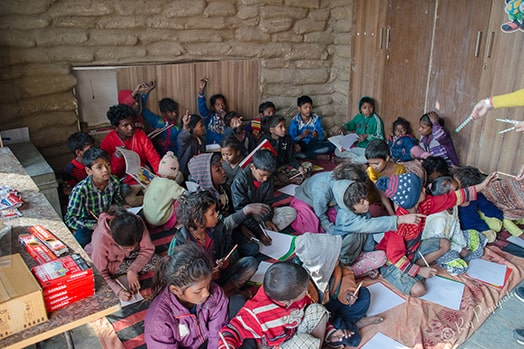
I want to be honest about the children I met that summer, because they were honestly quite unhappy. Kids in institutional care anywhere, in any country, carry the weight of separation from their families, and uncertainty about their futures. That was visible in Bangalore’s girls’ and boys’ homes the same way I imagine it would be visible in any foster placement in the U.S.
None of that unhappiness is a verdict on the system’s competence. If anything, the fact that Leena’s office was still trying to build vocational partnerships with NGOs like ECHO and BOSCO, still pushing for regular police patrols near schools, still running counseling programs for adoptive families months after a placement, told me the opposite of what I expected to find.
I came into that internship thinking the system would be slow, but I was forced to think: slow compared to what, and in service of what? A child welfare system that moved faster than India’s would necessarily be a system that checked less, trusted more informal arrangements, and accepted a higher risk of trafficking, coerced surrender, and unsafe placement in exchange for shorter waitlists. Nobody in that office was interested in making a tradeoff for unsafe placements. So ultimately, the Indian child welfare system is not efficient. It was never built to be.

One response to “Is India’s Child Welfare System Inefficient?”
Such an honest ethical well presented article . Reads so well and informative too.
LikeLike