
For many adoptive parents, bringing a child home is the end of a long and difficult process. But for Kanchan Gupta, it was just the beginning.
Gupta adopted her daughter in 2009, when she was six months old. The process itself was unpredictable. She and her husband had encountered long waiting periods and institutions that were not accepting registrations before eventually being connected with an organization in Ahmednagar. Once they found the right place, everything happened quickly.
“Considering that people were saying, ‘You need to wait for three years to register,’ to, you know, within four weeks we had a baby home,” Gupta said.
But having a baby at home did not mean Gupta suddenly knew how to navigate adoption.
“There wasn’t much counseling or anything in India at that point in time,” she said. Years later, Gupta became connected with Joy of Adoption, a community in India focused on supporting adoptive families beyond the adoption itself. The organization describes itself as a “community-led initiative” working to reshape the way adoption is understood in India. Its stated goal is not simply to help families form, but to support children and parents before, during and after the adoption process.
“In India, we did, until this, lack a structured support system for parents, adoptive parents, and children,” she said.
Joy of Adoption was founded by Radha Nagesh, an adoption and trauma-sensitive senior counsellor and trainer with more than 25 years of experience in child welfare, adoption and emotional support, according to the organization. Nagesh’s work focuses on trauma-informed care and helping families navigate adoption and family dynamics from a child-centered perspective.
The organization has grown into a team that includes certified adoption counsellors, counselors, special educators and other professionals. Its website lists Sandesh Rao, Jennifer Tavares, Renu Srinivasan, Vinish Gupta, Sugandha Agarwal and Bhaskar Agastya among its core team members, alongside specialist consultants such as special educator and play therapist Mouna Siddappa, legal consultant Kavita Bhandari, special educator Rama Sundaramurthy and psychologist Dr. David Adams.
The range of people involved reflects the range of issues that adoption can raise. For Gupta, that is one of the things that makes a support community useful. Her own experience showed her that questions do not necessarily appear when parents expect them.
Eventually, Gupta and her husband began learning more about adoption themselves. “We kind of started learning and studying about it,” she said, “and changing our ways to understand that what she’s probably going through and, you know, what is the impact she’s had.”
That kind of learning is exactly the space Joy of Adoption attempts to address.
One of Joy of Adoption’s main services is counseling. The organization says its counselors work with prospective adoptive parents, adoptive parents and children through both group and individual sessions. Its stated focus is on the “complexities of trauma, adoption and family dynamics,” while keeping the child’s needs at the center.
The organization says its support covers emotional, social and legal aspects of adoption, rather than treating adoption as a single event. It currently describes its community as having more than 600 families. For Gupta, having somewhere to ask questions without worrying about being judged is one of the most useful parts.
“It’s kind of a safe space where you can ask any question and not feel judged or anything,” she said. “And, you know, you can share any of your concerns, and people will chip in to help answer those.”
That matters because adoptive parents can find themselves asking questions that are difficult to answer through ordinary parenting advice. Gupta’s own experience illustrates that. Her daughter was adopted as an infant, but the questions surrounding adoption did not disappear as she got older.
The organization therefore works with families at different stages rather than focusing only on prospective parents. Its website describes support for families “before, during, and after the adoption process.”
Preparing parents for more than paperwork
Joy of Adoption also conducts training sessions for prospective adoptive parents, existing adoptive parents and counselors.
The training focuses on areas including attachment, trauma-informed care and everyday parenting challenges. The organization says the goal is to give parents the knowledge and skills to better understand children’s emotional needs and support healthy development. That emphasis addresses something Gupta wishes she had received when she became a parent.
“Nobody told us that it would be different from raising a biological child,” she said. For Gupta, that did not mean that every aspect of parenting her daughter was completely different. It meant that there were things she had not known to look for.
Joy of Adoption’s emphasis on preparation and counseling creates a place for families to discuss those kinds of questions rather than waiting until they become overwhelming.
Making adoption less isolating
Another major part of Joy of Adoption’s work is community. The organization hosts meetups and gatherings for adoptive families, with the goal of allowing parents and children to meet others with similar experiences. It also organizes an annual event called “Adoption Mosaic” during Adoption Awareness Month in November. According to the organization, these gatherings are intended to reduce isolation and encourage shared experiences, peer learning and access to resources.
“Overall, it’s always nice to have a support system,” Gupta said.
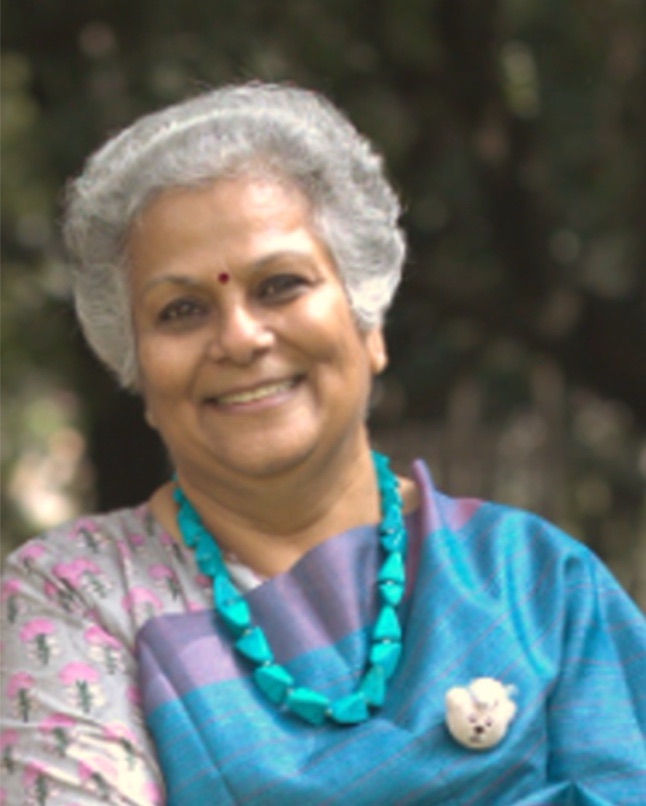
She had already been part of the adoption world for years before becoming involved with Joy of Adoption. Her connection began during COVID, when she saw a post in a Facebook group about children who had lost their parents during the pandemic. Gupta and her family offered to foster some of the children, which introduced her to Radha Nagesh.
Gupta remembers Nagesh as someone who had already been bringing adoptive parents and specialists together before Joy of Adoption formally became the organization it is today. “She spends a significant amount of mind space and time bringing together adoptive parents, bringing together specialists, to, you know, talk, to meet, to understand, you know, what are the challenges, and how we can deal with them,” Gupta said.
That community is not limited to one type of professional. Along with counselors, Joy of Adoption’s network includes specialists in education, mental health, law, trauma and child development.
The organization also includes what it calls “Adoption Pioneers” — people with decades of experience in adoption, child protection and policy.
Among them is Nina P. Nayak, a child rights advocate who has worked in adoption and child protection for more than four decades. Her work has included government and nonprofit roles, child welfare committees and policy development. She is also an adoptive parent.
Another is Dr. Nilima Mehta, who has worked in adoption and child rights for more than 40 years and has specialized in pre- and post-adoption counseling, birth-parent counseling and “Search for Roots” counseling for adoptees.
Dr. Vinita Bhargava, another pioneer listed by the organization, has worked in adoption policy and practice for more than 25 years and was a founding member of the Central Adoption Resource Authority.
The inclusion of people with long histories in the field gives the organization a connection to both lived experience and the larger development of adoption policy in India.
But Joy of Adoption’s community is not built only around experts, parents themselves contribute their experiences. That is part of what Gupta finds valuable. “You can share any of your concerns, and people will chip in to help answer those,” she said.
The organization says one of its goals is to change the narrative around adoption in India. Its website describes adoption as a celebration of “love, inclusion, and new beginnings,” while emphasizing that prospective parents, adopted individuals and supporters all have a place in the community.
For Gupta, changing that narrative also means pushing back against some of the assumptions she encountered as a parent. She remembers relatives asking about genetics and her daughter’s background. “‘Oh, they’re not your genes,’” she recalled people saying. “‘You don’t know what background they’re coming from,’ and, ‘We don’t know how they’ll turn out.’”
Over time, she learned to stop letting those comments dictate her choices. “You kind of just shut it on and do your thing,” she said. That does not mean stigma has disappeared. Gupta believes attitudes toward adoption have changed, particularly in urban India, but she still sees adoption as a minority choice.
“It’s still a minority, and it will continue to remain that way,” she said. “But definitely more and more people are going in for adoption.”
Joy of Adoption’s work sits within that changing landscape: not simply encouraging people to adopt, but giving families a place to talk about what adoption actually looks like after the child comes home.
One of the more unusual things about adoption is that the legal process can be relatively short compared with the amount of time a family spends dealing with its consequences. A child might be adopted as a baby and still have questions about adoption years later.
Parents may encounter questions about attachment, identity, trauma, school, adolescence or how to talk about birth families. Joy of Adoption’s approach reflects that longer timeline.
Its training, counseling and community programs are designed around the idea that support can be useful at different points in a family’s life. The organization says its early-intervention work is intended to support emotional well-being, family stability and healthy attachment.
“It’s been one heck of a journey, if you ask me, honestly, as a parent,” Gupta said. “I think it’s been a good journey,” she said of her connection with Joy of Adoption.
And perhaps the most important part is that the journey is allowed to keep going — with parents asking questions, children having their own voices, specialists offering guidance and families learning from one another.
Adoption may be the moment a family is legally formed. But Joy of Adoption allows support to extend much further than that moment.

3 responses to “How Joy of Adoption Is Building a Support System for Families”
Beautifully written
LikeLike
The support given by the joy of adoption is laudable.
We learn so much from your diverse articles on adoption Teesta Bhola Shah.
LikeLike
I loved this story. I am sure many families will benefit from learning about this support system that exists post-adoption.
LikeLike