
At Shishu Mandir, a child care institution in Bangalore, caring for children isn’t just a job description. For employees who have spent years in the institution, daily caretaking routines have become personal. The children are not simply children they are assigned to care for. They have become their own in many ways.
“When they see us, they run towards us like a mother,” said Sarasu, who has worked at Shishu Mandir since 2007. “I like that sort of thing.”
Sarasu is one of several employees whose lives have become closely intertwined with the children at Shishu Mandir. The institution runs on its people, who have chosen to stay and help the children for decades.
“I first joined this place,” Sarasu said. “But as time went by, I got attached to all the children. I couldn’t bring myself to leave the children.”
Her attachment became stronger than the possibility of finding work elsewhere. “There is an attachment to all the children, beyond just the salary,” she said. Her mornings begin with preparing food for the youngest children, feeding them, bathing them, and cleaning their surroundings. She washes their clothes and utensils and makes sure their basic needs are met. When there is time to play, she plays with them.
“If they are upset, if there are children crying, what do you do to console them?” she was asked. “We give them toys,” she said. “We pick them up. If they are toddlers, we rock them in cradles.”
The work might sound ordinary, but for children who entered Shishu Mandir without the consistent presence of their own parents, those ordinary acts become important reassurance.
Marypriya has worked at Shishu Mandir for 17 years. “Before I came here, I was working with children,” she said. “So, I got a job here and accepted it.”
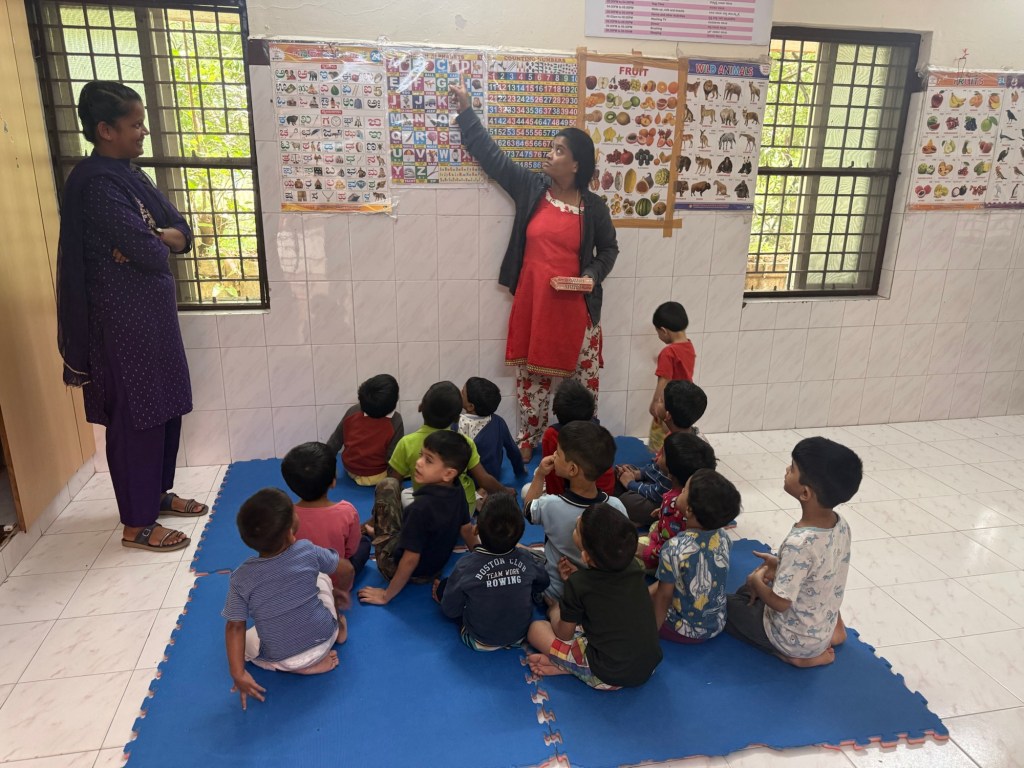
Over the years, her work has expanded beyond simply supervising children. Her days include teaching, play and activities designed to help young children learn. She arrives around 11 AM and begins by giving the children fruit. Then the children move into their lessons. “Lessons are through play,” she explained. “Some rhymes, some of this, making them write, making them recite. Giving puzzles, like that.”
Marypriya said that she often finds herself thinking about ways to bring new ideas back to the children. “If I see anything anywhere, I keep feeling that the children should be taught this, made to do this,” she said. “When I see something on a mobile, I feel the children should be made to do it in the same way.”
In this way, the employees help children develop curiosity and creative skills in their earliest years, preparing them to enter a formalized school system.
Nikhat Taj’s experience began differently, as Shishu Mandir was her first job. Before that, she tailored at home and was looking for work during a difficult period in her life. She initially came to the institution through an agency as a caretaker. At first, even others doubted she would stay. “I used to be very stylish,” Nikhat recalled. “I would come looking very neat and tidy. They all thought, ‘She comes like this, she won’t do the work.’”
She proved them wrong. “After coming here, just three days in, I started liking it here,” she said. “I told myself I have to do it, no matter what, and took it as a challenge and did it.”
Ten years later, she has found that the children have become an important part of her own emotional life. “Whatever tension our family had, however much it was, when about 40 children come here and call out ‘Amma,’ how do we feel?” she said. “So we forget everything.”
“When we come in through the gate from outside, we feel some tension, some mood off,” she said. “So, after coming here, we feel happy and good. All the tension from our minds just disappears.”
Her responsibilities include checking on the children, organizing supplies and helping coordinate the work of the other caretakers. But she also makes room for something less formal: play.
“When the children want to dance, we consider their mealtime,” she said. “If it’s not mealtime, we play loud music and dance with the children.”
In those moments, she said, the distinction between employee and child can disappear. “We forget what our role is, and why we have come to work,” Nikhat said. “But we become childlike with the child then.”
When children leave the institution to get adopted or enter school, the employees do not carry out the formal adoption process; social workers handle those responsibilities. But after spending months caring for a child, watching them grow and becoming attached to them, the prospect of their departure naturally brings mixed emotions.
Nikhat said that giving a child to an adoptive family can be painful, but she ultimately sees it as an opportunity. “It feels happy,” she said. “We also feel somewhat happy, thinking they will get a new family. That child will get a future.”
When children leave, her message to their new parents is straightforward. “When you take them, take care of them like your own child, take as much care as possible,” she said.
Nikhat is particularly emphatic that children at Shishu Mandir should never be treated as less deserving of care because they are not biologically related to the people looking after them. “If a child comes inside our gate, it’s our child,” she said. “We will take care of it like our own family’s child, we don’t care if the child isn’t ours, or what caste it belongs to.”
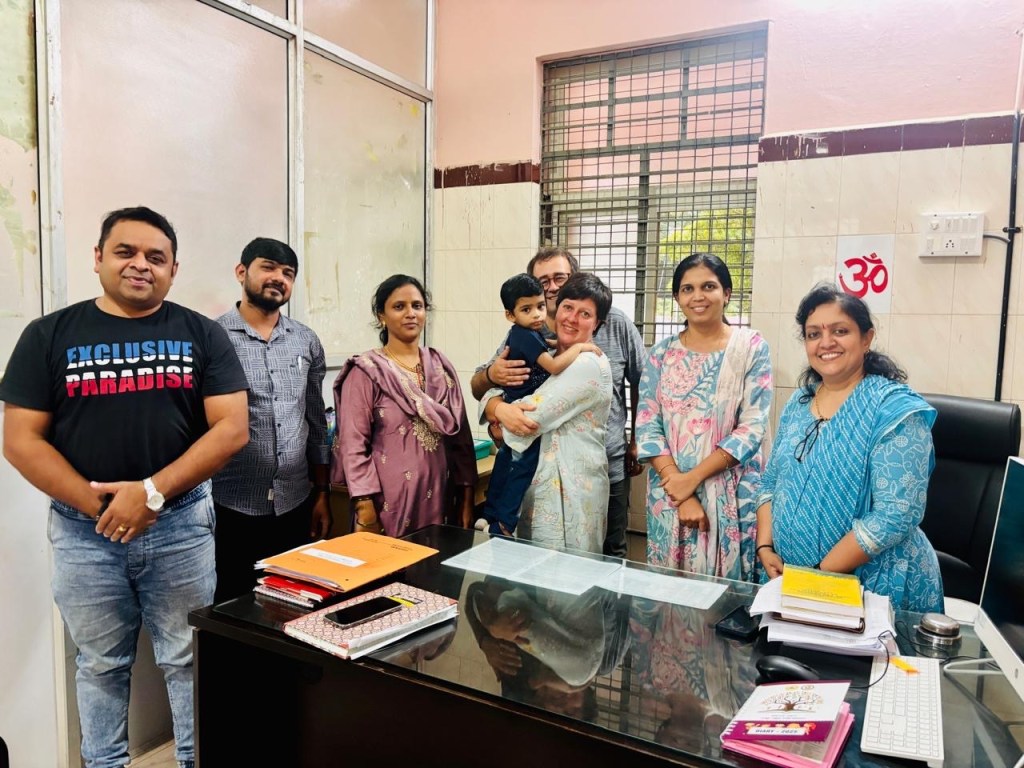
“It’s not just me alone,” Nikhat said. “From the entire Shishu Mandir, starting from Sheela Madam upstairs to the caretakers downstairs, we are like mothers to them.”
That sense of collective responsibility perhaps best describes the culture these employees have created. It is also where Superintendent Sheela Biradar’s leadership intersects with the work of the women downstairs.
Since Biradar became superintendent, employees have noticed substantial changes in the institution. Nikhat described her impact particularly strongly.
“Now when Sheela Madam came, there have been many changes here,” she said. “They have done an immense amount.”
She believes Biradar has helped transform the institution into something that feels more like a home. “Like how all things should be perfect in a house, Madam has made everything perfect for us here,” Nikhat said. “They have made it like home. They have made it even better than home here.”
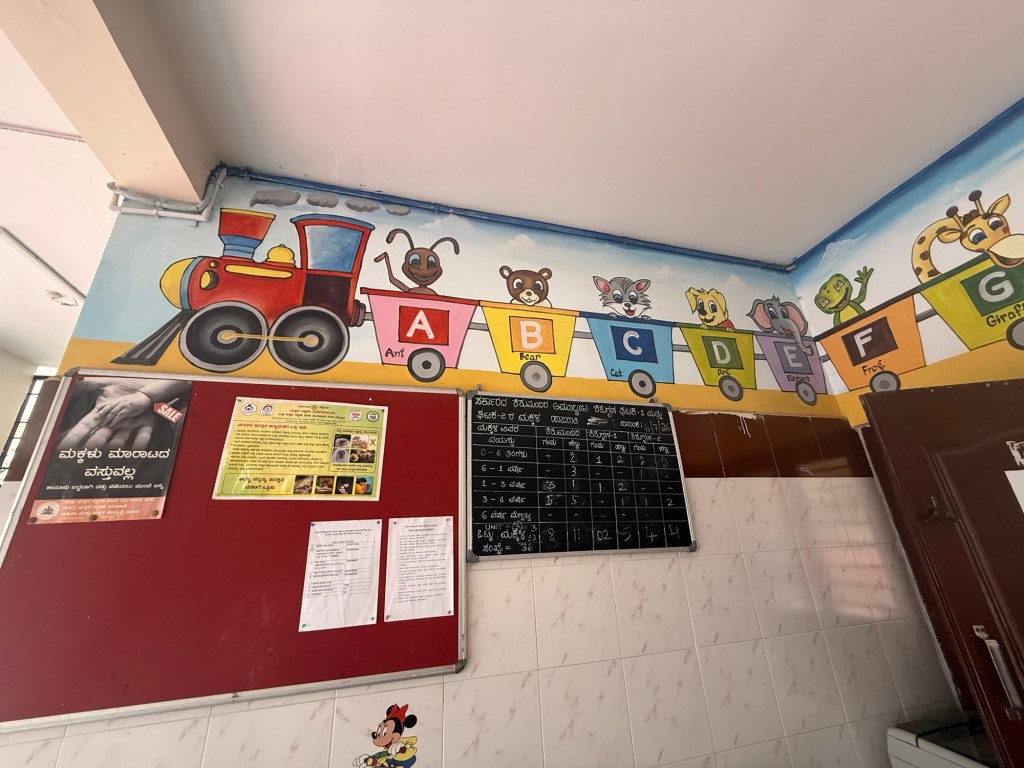
Sarasu, meanwhile, has seen changes in the institution’s organization and educational opportunities. She said the institution has provided separate rooms as the number of children has grown, and children now receive more structured educational support.
“The institution has changed a lot now,” she said. “All the children are studying well. Education.”
For the employees, however, improving Shishu Mandir is not only about adding facilities. It is about ensuring the children experience ordinary childhood moments despite the circumstances that brought them there.
Festivals are an important part of that.
The employees described celebrating Christmas, Ugadi, New Year, Children’s Day and national holidays. Children receive special food, new clothes and opportunities to participate in songs, dances and other programs.
For Marypriya, these celebrations have become so important that she spends them at Shishu Mandir rather than going elsewhere. “I don’t stay at home,” she said. “I celebrate here, with the children.”
She described the institution in deeply personal terms. “Shishumandiram is everything to me,” she said. “To tell you the truth, my temple is the Shishumandira itself.”
These celebrations may seem small compared with the larger questions surrounding adoption and child welfare, but they matter precisely because they give children experiences that are not defined by their circumstances.
Marypriya described children arriving without speaking much and gradually becoming more communicative as they spend time at Shishu Mandir.
“When they first come here, they don’t speak, they remain silent,” she said. “After coming here, having learned our Kannada, they speak so well that it makes us feel happy.”
The same is true of the children’s emotional adjustment. Nikhat explained that children who arrive from outside may behave differently at first because the environment is unfamiliar.
“They are coming from outside; this environment is new,” she said. “But after coming here, they can be looked after, and the child will adjust seeing the teachers.”
“We talk to children with affection,” she said.
The employees’ commitment is perhaps most striking in the way they describe difficulty. When asked whether the work has become more difficult over the years, both Sarasu and Nikhat essentially rejected the premise. Sarasu said she had never felt the work was difficult. “All work can be managed easily,” she said. “Somehow, if we get involved here, we manage our work like our own home.”
Nikhat expressed a similar philosophy. “If it comes to my mind as ‘mine,’ nothing is difficult for me,” she said. The children are not their biological children, but the employees take responsibility for them as though they were. They feed them, teach them, comfort them, celebrate with them, and watch them grow.
When a child eventually leaves for a new family, the employees must accept that the care they gave was temporary. They hope what they provided during those months or years becomes part of the child’s foundation for the future. The institution’s future depends on its leadership’s plans for education, facilities, and services. But its present depends on the people who show up every day.
