
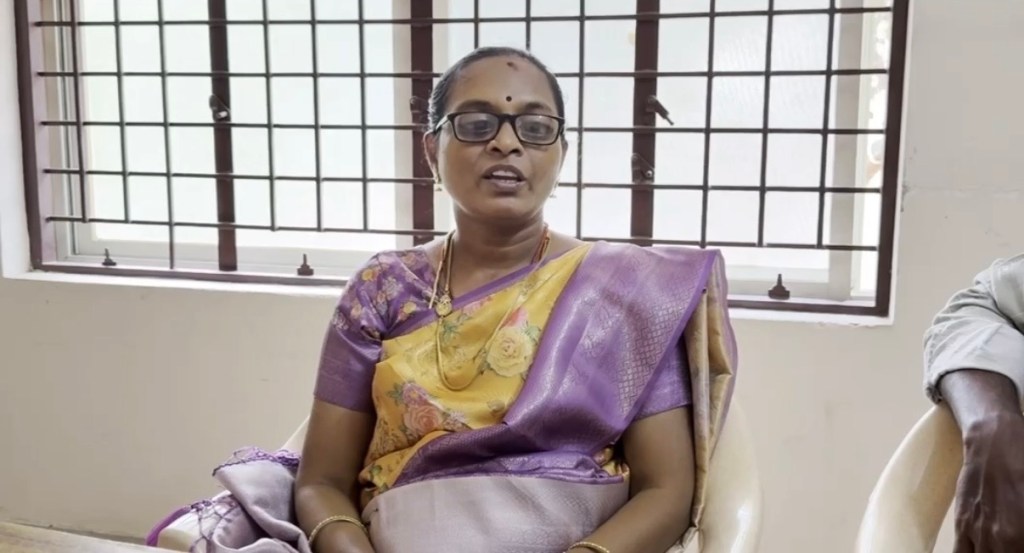
For Rekha, a State Bank employee from Chennai who lost much of her vision to a degenerative eye condition, the wait for a child began the moment she and her husband Krishnan made a decision most couples never have to face. Because of her condition, they had been warned that any biological child would likely inherit the same eye defect. So they chose a different path.
“We can adopt a child and raise them,” Rekha’s mother, Mrs. Godavari, recalls the family deciding. “If we show affection, that child will be affectionate towards us.”
The family registered on the CARA website. Then they waited — four years.
“After registering on the CARA website, four years later, a baby came for us in Bangalore, we got a referral,” Mrs. Godavari says. The message arrived on June 10th: this child is reserved for you.
The relief of a referral quickly gave way to fear. Rekha explains that the adoption agency in Chennai that had guided the family through the early stages of the process had not disclosed something important to Shishu Mandir — her disability.
“The ones who handled it in Chennai didn’t mention it,” Rekha says. When she arrived in Bengaluru and Shishu Mandir staff realized the baby she was matched with was only three and a half months old, the question became urgent: “How will you manage?”
“They gave counseling on all such things. Then only we came to know how much of a problem it is,” Rekha says. “And I got scared. Oh, will we now… this baby… I have cried for so many days fearing that she might not be found.”
Rather than turning the family away, staff at Shishu Mandir worked to find a way forward. Mrs. Godavari describes the moment counseling shifted from obstacle to solution.
“Because I am also 60 years old, my son-in-law is also 50, and my daughter is over 40 with a disability, so it would be easy for you to raise a child who is two to four years old,” staff told them — pointing out that the baby in question was much younger, only three months old. “First, they gave some counselling, and then they did all these things. After that, it was as if God entered their minds. For us, that baby was okay, okay, guided us a little on what all is needed, asked us to get all the documents ready, and asked how you would raise the child.”
Mrs. Godavari is direct about what could have happened instead: “Otherwise, if they had thought, they could have refused to give the child citing that disability. Even so, they did everything, for giving a child to our daughter and son-in-law.”
Krishnan, for his part, made his own decision to make the adoption work: he quit his job so the family could focus on raising the child, with Mrs. Godavari staying on to help care for the baby at home.
After the counseling, after the fear, came the moment Rekha says she still cannot fully put into words.
“Coming here again for counseling, I saw the baby for the first time,” she says. “I can’t share my experience in my words.”
By the time of her interview, the family had been at Shishu Mandir for a week, learning the practical, physical work of new parenthood under staff guidance. “They teach us how to hold that baby, how to be caring towards them. They told us everything. I am comfortable now, to mingle with the baby.”
“They Are Not Working for Their Own Sake”
Across every member of the family’s account, one theme repeats: astonishment at the sheer effort Shishu Mandir’s staff put into children who are not their own.
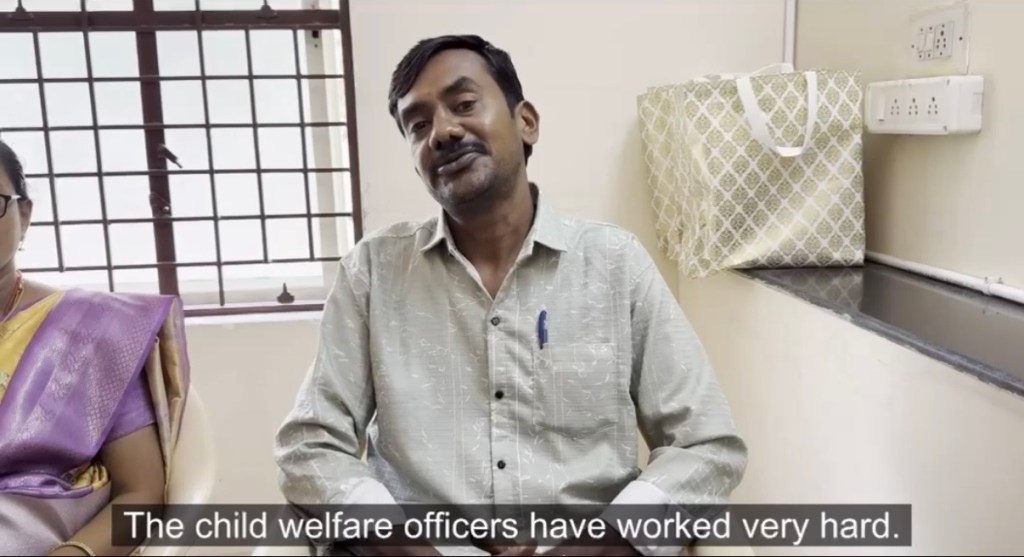
“It’s not easy to look after one child alone,” Krishnan says. “We find it so difficult to look after even one child at home. How do they manage all these children here, that they take care of them so well — the children here have made us feel extremely happy with their good care. It’s difficult for us to even see one baby. If they have this many babies in their home, and they look after so many here… they don’t look after all these for personal gain. The child welfare officers have worked very hard.”
Rekha echoes the same disbelief. “Everyone is working very hard. They are not working for their own sake. But as long as I am alive, I am very thankful to this organization.”
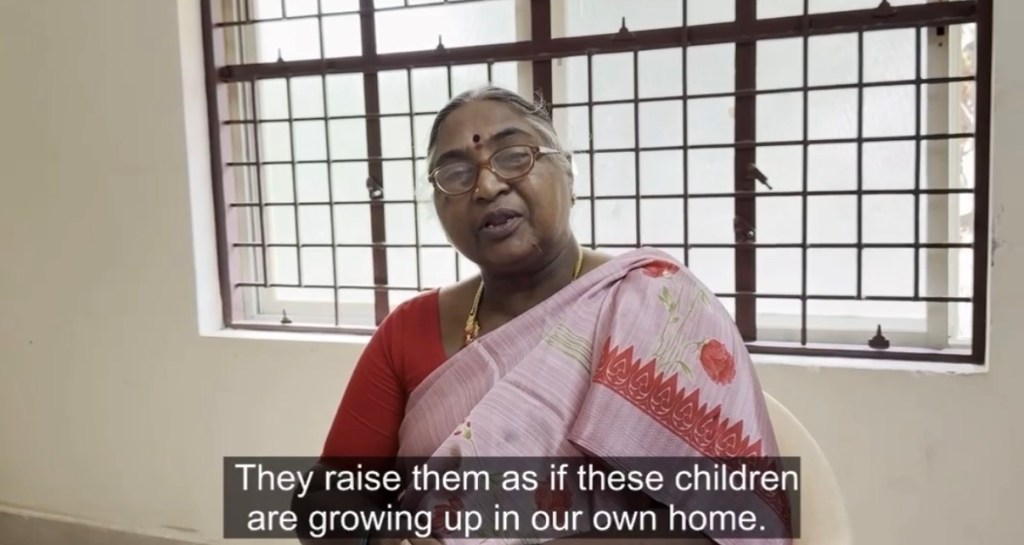
Mrs. Godavari, comparing Shishu Mandir to an institution the family had encountered in Chennai, is unequivocal: “We saw the institute that came to HSR in Chennai. We didn’t see any children outside there. But seeing all these children here, they take care of the children here wonderfully. We are truly very happy. The way they look at these children, they raise them as if these children are growing up in our own home. It’s not like raising just any children, but looking at them as if they were their own children — is surprising to us. And at the same time, it makes us very happy.”
By the end of the interview, fear has given way fully to gratitude. Krishnan, reflecting on everything the family went through — the confusion, the late disclosure, the counseling, and finally the handover — puts it simply: “As long as I am alive, definitely, I am very thankful to this organization.”
Mrs. Godavari closes the family’s account with a statement that doubles as a tribute to the institution itself: “We are indebted to this childcare center forever.”
