R. Marin didn’t set out to write a memoir. The Italian-born author, who now lives in France, took his pen name from his given name, Roberto, paired with the French word for “of the sea.” Over the past several years, he’s used that name to turn his own upbringing into a multi-part novel rather than a straightforward autobiography. The first volume, Despite It All, I Made It Through, covers his life from birth to age eighteen: a childhood shaped by abandonment, institutional care, and a foster mother who, under Italian law, was never allowed to legally adopt him because his biological mother never relinquished her rights. The second book, Standing (French title: Debout), picks up the story once he’d moved to France as a young adult. By the time of publication, the trilogy had been completed in French, English, and Spanish, while the Italian edition of the third volume was still in preparation. Marin has also said he hopes to continue the story in future books.
Since publishing his first book, Marin has built a small but devoted following on Instagram, where readers — some of whom grew up in circumstances similar to his own — have started reaching out to him directly, sharing pieces of their own stories in return. He sat down for an interview to talk about why he decided to put his life on the page, what readers can expect from the books so far, and where the project might take him next.
The idea of writing his life down had been with him for years before he actually did it, he said, but he was never interested in a conventional memoir. “I didn’t want to write a biography. I wanted to do something special — if you’re a reader, then you come inside my life and you live my life. So it’s like a novel,” Marin explained.
That choice didn’t make the writing any easier. Revisiting his own childhood on the page meant sitting with memories he’d spent years not examining too closely. “I will not lie to you that it was difficult, because you go inside your brain and you try to remember everything. You cry, you smile, you cry, you smile. It’s a very difficult job.” It was technology that made the process bearable — being able to write things down, walk away, and come back to them later, rather than holding it all in his head at once. “Now with the computer, it’s easier, because you can write, and it remembers what you say, and you can look at it and read it again. You see if you want to say this or not. At the end, you finally have the book — and honestly, I was surprised when I finished.”
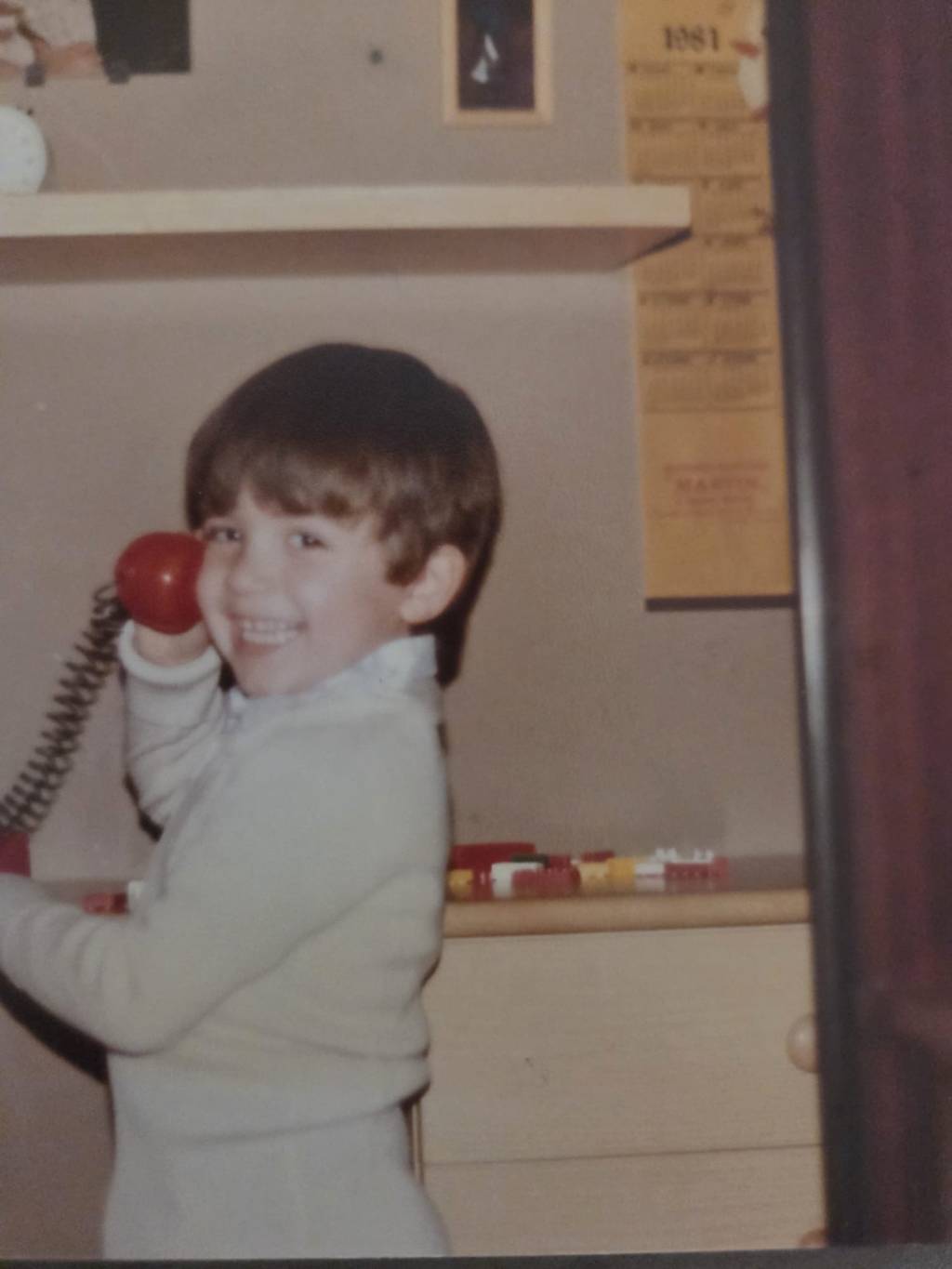
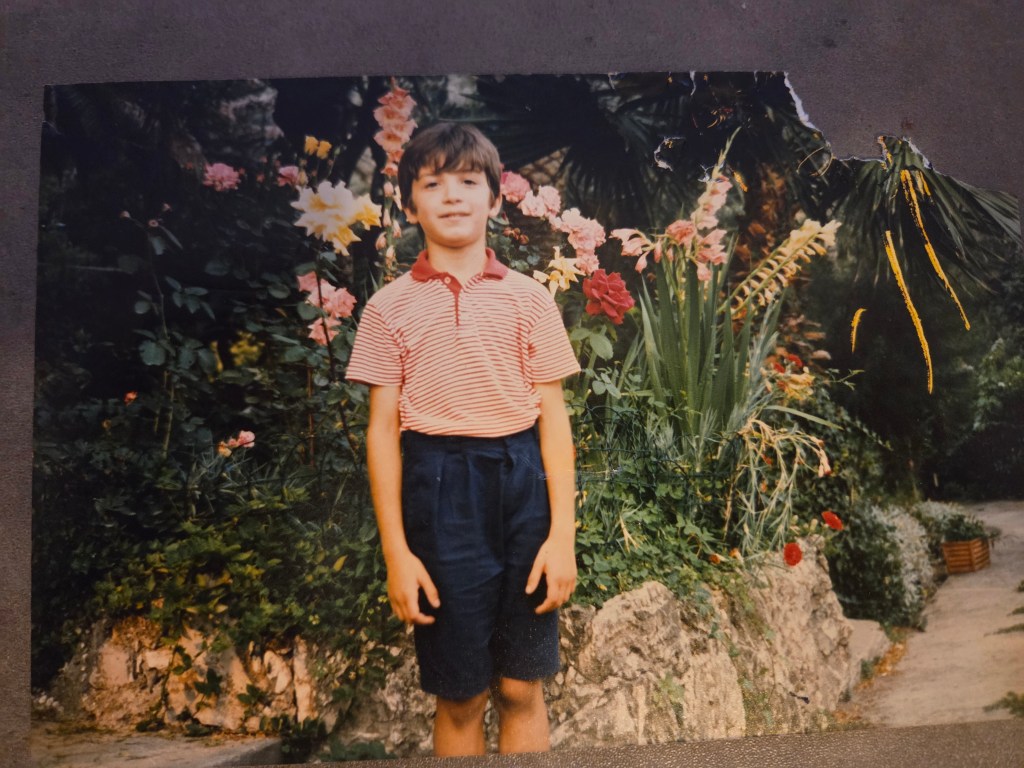
The first volume, he said, needed to cover his entire early life to make sense: the abandonment, the years in institutional care, and the resilience that came out of it. Some of that material — including years of abuse he experienced as a child — was harder to put into words than the rest. Rather than write it in anger, he tried to let the events speak for themselves. “I try to put the history down without saying exactly the words, without asking for pity or asking people to be angry at these men, because at the end, it’s my history. I just wanted to explain and say my life, like a novel.” Getting the details right meant returning to decades-old memories and photographs he’d kept since childhood. “I am forty-nine years old now,” he said. “You can imagine how many years I’ve had this book inside me.”
What started as something private eventually became something he wanted to share. “First step, it was for me. It was personal. For so many years I wanted to write my life, and finally I decided, and finally I arrived,” he said. It was only after he’d finished the manuscript that its purpose expanded beyond himself. “I read my book again and I said, I’m not alone. There are a lot of people who suffer in the world. There are a lot of people who think they are alone. Why don’t I give my message, my life, to people who need support?”
He’s matter-of-fact about the fact that the book still has to sell in order to reach anyone. “Of course, of course — sell the book. This is normal. But how do you share a message? By selling the book, not another way. So I’m honest about that.” And writing it hasn’t resolved everything for him, he’s careful to say — it’s helped him make peace with the past rather than erase it. “I feel a little better that I wrote this book. Not completely safe, but a little better. And when I read it, I say, okay, this is my past — what can I do? Try again, or just understand that this is my past? I decided to understand this is my past. It was the best way to continue. Because after all, life continues.”
That message has found an audience faster than he expected. At the time of the interview, he had opened his Instagram account only six weeks earlier and had already drawn roughly 250,000 views and more than 2,500 followers.”Even I don’t realize, honestly, what’s going on,” he said. The following comes with a responsibility he wasn’t necessarily prepared for. Strangers now message him about their own lives, and their own suffering, and he doesn’t always know what to say back. “I’m not a psychologist. I’m a writer, you know?” One message in particular stayed with him — a woman who wrote simply that she felt the same way he had. “What could I answer her? I said: don’t worry, we survive, we push through. It’s my message now — really, it’s in my heart, you know?” Early reader reaction, so far mostly in French, has told him the book is landing the way he hoped it would. “I have some French comments on Amazon, where I sell the book. And when I read them, I was in shock, because I said, they understand my book.”
Marin sees Despite It All, I Made It Through as only the beginning of a much longer project. His second book, Standing (French title: Debout), follows him into adulthood after he moved from Italy to France — the first apartment, the first relationship, the difficulty of finding work and navigating paperwork as a foreigner. He’s keeping most of the details close for now. “I will not tell you the book — I want you to read it. But I think you will smile, because there are many, many little things that will make you smile.”
And he has no plans to stop there. At the time of the interview, he was already working on the third volume. “You will see in the second book — I’m already preparing the third book. I honestly already started. I don’t know how many books I’ll have of my life, but I think about five, minimum,” he said. “So if a reader starts to read, they have at least five books to read. Don’t worry — all of my life. Because I have many, many things to say. Many things happened. Errors, too.” Five books was his intention at the time of the interview, although he says his plans may change.
Asked about his own future, separate from the books themselves, Marin described something closer to a hope than a concrete plan. “I have a little dream, to be honest. I would like to live with my books, and give up my other job, and go back to live in Italy — because right now I live in France. Buy myself a little house near the sea, and just enjoy life. And if I find love, why not — but that’s an option. We don’t know destiny. This is my little dream.” He was quick to add that the dream doesn’t hinge on everything going perfectly. “If it doesn’t work, I have a job, I continue my job. But I will continue to write, too, because I don’t want to stop.”
He thinks of the books themselves as inseparable from their message. “My book, it’s a message. It’s a novel — a novel with a message.” He’s also realistic about what it takes for a self-published book to actually find readers without a marketing budget behind it. “Just give me the chance — read the book, and you will see. Don’t just wait for other people to read the book first and give their opinion. This is the reality of a book, to be honest — if you don’t have some company behind you, you understand what I mean.”
You can find R. Marin’s first book on Amazon at this link: https://www.amazon.com/dp/B0H2SLM12X

One response to ““Despite It All, I Made It Through”: Author R. Marin on Writing His Way Through His Own Adoption Story”
Always love the humanity and emotion in your writing and stories
LikeLike